You Can’t Outrun Your Problems, but…

…You Can Choose Where to Solve Them
I have moved enough times to know that geography is not a cure for being human. You can move across the country, buy a cabin in the woods or start over on a Greek island, and you will still arrive with your fears, habits, insecurities and unfinished emotional business. You will still have bills to pay, relationships to tend to and difficult decisions you would rather avoid. Wherever you go, there you are. I have tested this theory extensively, and I can confirm that you remain annoyingly present in every location.
Many people use “you can’t outrun your problems” as if it means there is no value in changing where or how we live. While a new place cannot do our inner work for us, our surroundings do have an enormous effect on how capable we feel of doing that work. Some environments make us feel more alive, creative and connected, while others consume so much of our energy that we have very little left for changing anything.
My theory? You may not be able to outrun your problems, but you can decide where you want to work on them.
Place Matters More Than We Admit
We often treat the ability to endure an ill-fitting life as evidence of character. We tell ourselves that we should be able to thrive anywhere if we are disciplined enough. If we are unhappy or exhausted, we assume we need to work harder on ourselves instead of considering whether our surroundings might be working against us. There is a strange pride in enduring environments that drain us, as though making life unnecessarily difficult proves that we are high-functioning adults. I do not believe there is anything noble about spending all of your energy surviving conditions you have the ability to change.
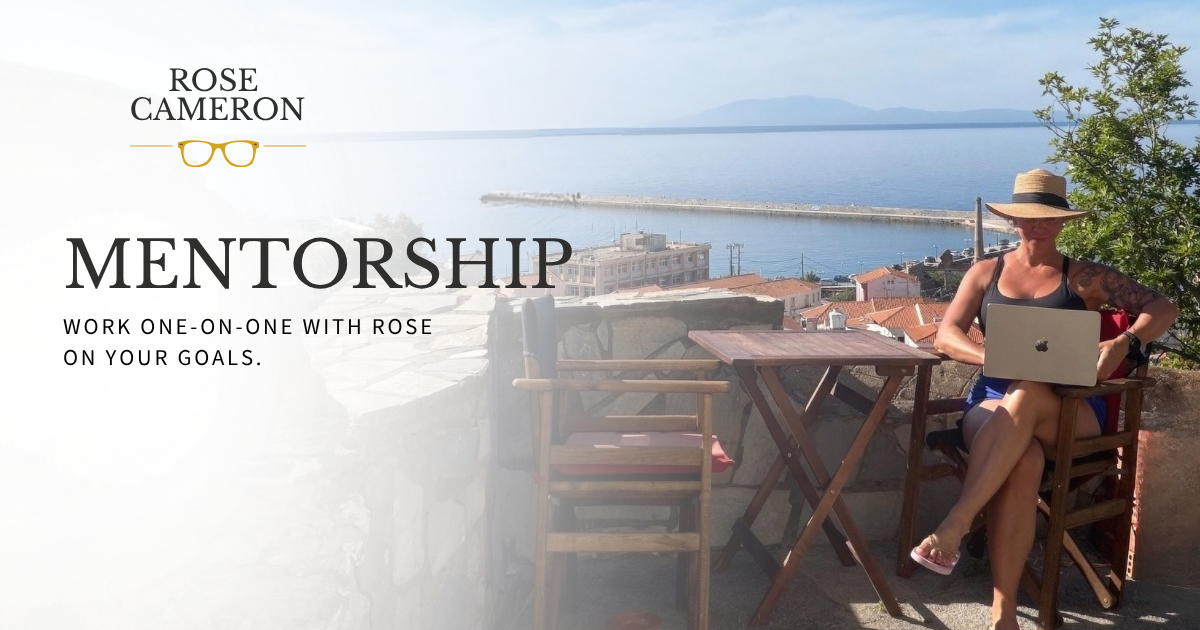
I am a better version of myself when I can walk outside, move my body, see the water, make things and spend more of my life in the natural world. These things do not solve my problems, but they support the kind of person who is available to solve them. When I have more energy, I make better choices. When my daily life reflects what I value, I spend less time fighting myself and more time addressing what actually needs my attention. The worries and irritating habits are still there, but I have more perspective available to deal with them.
This does not mean that one type of place is right for everyone. My beautiful, boat-access cabin would be someone else’s logistical nightmare, and an old house on a Greek island would make plenty of people want to run back to an organized suburban street immediately. Some people need activity, convenience and neighbors they can see from the window, while others need quiet, land and enough space to hear themselves think. The important thing is not finding the objectively perfect place (because that does not exist), it is paying attention to the conditions that allow you to feel most like yourself.
Running Away is Not The Same As Moving Towards
People are often warned not to run away from their problems, and sometimes that warning is completely fair. If you move expecting a new location to repair your relationship, erase your grief or turn you into someone who never feels anxious, you are asking geography to do a job it cannot do. The initial excitement of a new place can interrupt an old pattern, but it cannot permanently change a pattern you refuse to examine. Eventually the parts of yourself you avoided will start unpacking their boxes. A beautiful view may soften a difficult day, but it cannot have an uncomfortable conversation on your behalf.
But sometimes leaving is an honest response to what you have finally learned about yourself. If you know that you need community, remaining somewhere isolated is not necessarily brave. If you come alive in nature, spending your entire life surrounded by traffic and concrete may not be a character-building exercise. If the culture around you rewards a version of success you no longer want, it makes sense to look for a place where your actual values have room to exist.
The useful question is not simply, “Am I leaving?” The better question is, “What do I expect this change to do for me?” If you expect the move to make all of your problems disappear, you will probably be disappointed. If you are choosing an environment that better supports the way you want to live while accepting that you still have work to do, that is making a thoughtful decision about the conditions in which you are most likely to grow.
The Right Environment Makes Participation Easier
I think we underestimate how much of our behavior is shaped by what our lives make easy. When making art requires clearing an entire room and defending three uninterrupted hours, we create less. When walking requires getting in the car and driving somewhere first, we move less. When our surroundings constantly overwhelm us, even fairly ordinary problems can begin to feel impossible. The right environment does not remove effort, but it can make the effort more likely. It can create a little more room between you and the things that exhaust you and make movement, creativity, connection or rest part of your ordinary day instead of another task you must force into an already crowded life.
This is one reason I care so much about creating a life that feels like your own. I am not talking about building a life in which nothing hurts and every day looks beautiful. I live in gorgeous places and still spend an impressive amount of time dealing with house repairs, bureaucracy, money, work and the ordinary complications of being alive. The point is to build a life whose inconveniences feel connected to something you actually want.
You Are Allowed to Change Your Conditions
“Fear is the cheapest room in the house, I would like to see you living in better conditions.” - Hafiz
I love that quote as it reminds me that our lives are like houses. YOU get to choose the living conditions. Do you live with a view? Is it warm and inviting? Is it cramped and prison-like? Does it support or hinder you?
There are problems we need to stop avoiding. We need to apologize, set boundaries, ask for help, change our habits and address the things we keep hoping will somehow resolve themselves. A move cannot replace any of that, and a prettier location does not automatically make us more courageous or self-aware. But personal responsibility does not mean we must remain in conditions that consistently work against us - you are allowed to change your surroundings while you change yourself.
You are also allowed to admit that one place brings out a better version of you than another. You can choose whatever helps you feel more engaged with your own life. You do not have to prove your growth by attempting it in the least supportive environment available. There is no prize for making your problems harder to solve than they already are so sometimes the responsible choice is to stop waiting for yourself to adapt and start creating conditions that actually fit.
You will still be yourself when you arrive, complete with all the things you have not figured out yet. That is not a reason to stay somewhere that makes you feel absent from your own life. Bring yourself with you, and bring the problems that still need your attention. Then find a place that gives you more energy, clarity and courage to work on them.
You cannot outrun your problems, but you can absolutely choose a better place to solve them.