The Cost of Convenience
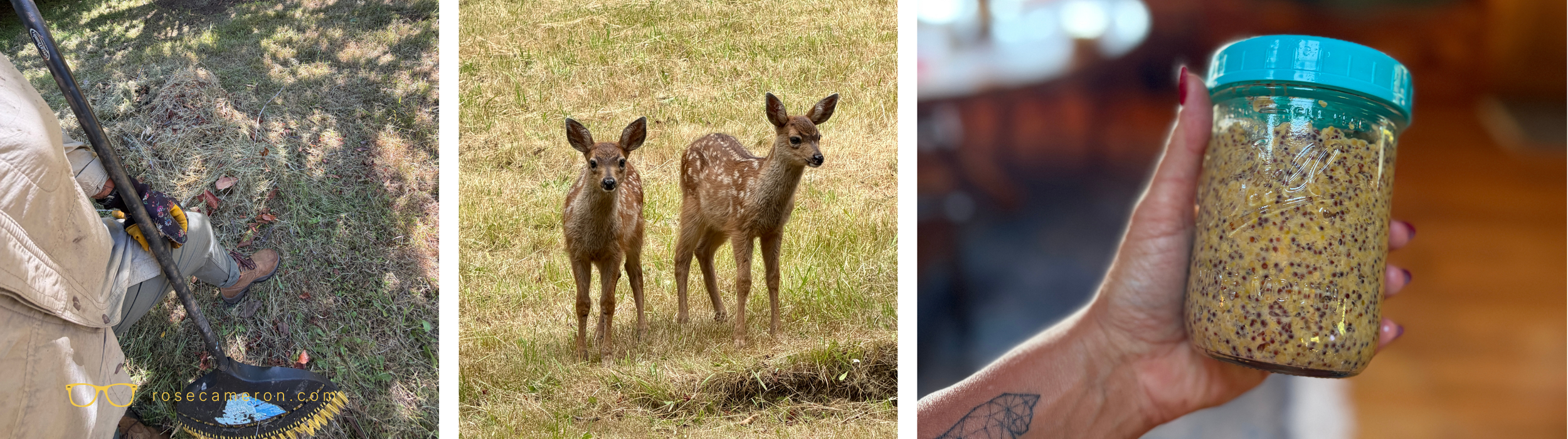
A friend of mine laughed the other day when I showed her the grainy mustard I had made.
She said, “Don’t you know you can just buy that? It’s so much easier.”
I laughed too. Of course I know it is easier to buy mustard. But something in me immediately thought, “That’s the whole point.”
So much of modern culture is organized around efficiency, convenience, and ease. We have spent decades removing work from daily life, then wondering why so many of us feel disconnected and vaguely dissatisfied.
We race to the gym in air-conditioned cars, park as close as possible to the entrance, then go inside to run on a machine. We buy food grown thousands of miles away, picked before it is ripe and shipped across oceans in refrigerated containers. We buy meals that have already been chopped, cooked, assembled, packaged, and frozen so they can be ready in two minutes with no dishes and almost no thought. Our fish waits at the store stripped of any resemblance to a fish. No head, bones, scales, fins, blood, or evidence that it was ever alive.
Is it convenient? Of course. But I would argue that something is missing.
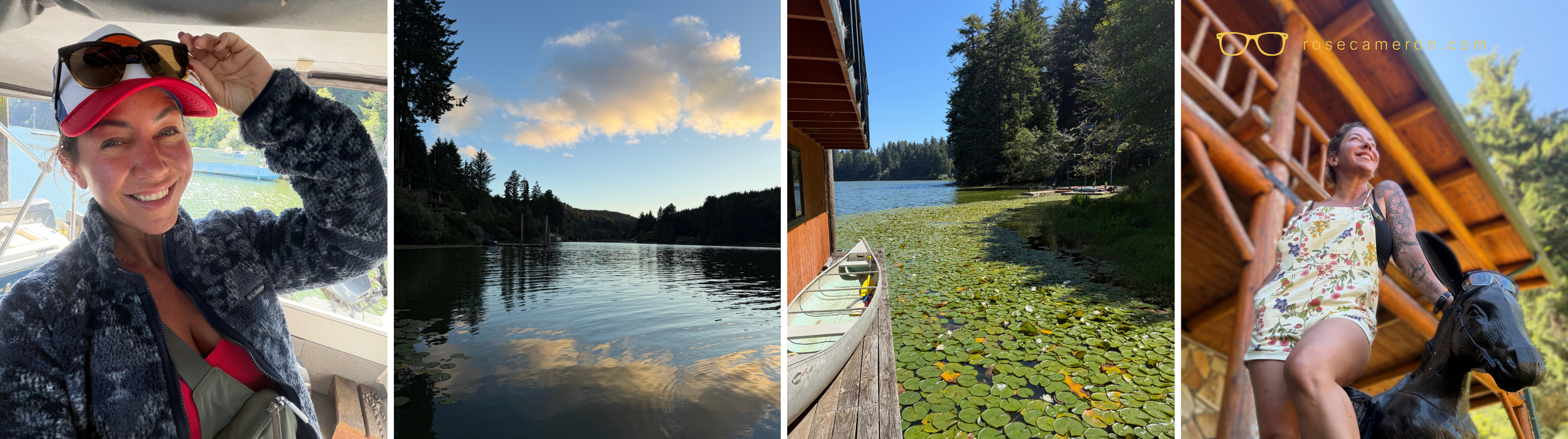
At the lake in Oregon and at our home in Greece, life is harder in ways that I have come to value. I bake our bread. I make mustard. I ferment kombucha and yogurt. I hem our clothes. We tend to the land, repair what breaks, preserve what is growing, and work with what is available. We catch our own fish, then clean and cook it, making stock from the bones or burying them deep near the apple tree as fertilizer. None of this is especially impressive. These are ordinary tasks people performed for generations because they had to in order to survive. I do not have to do most of them, and that is precisely why choosing to do them matters.
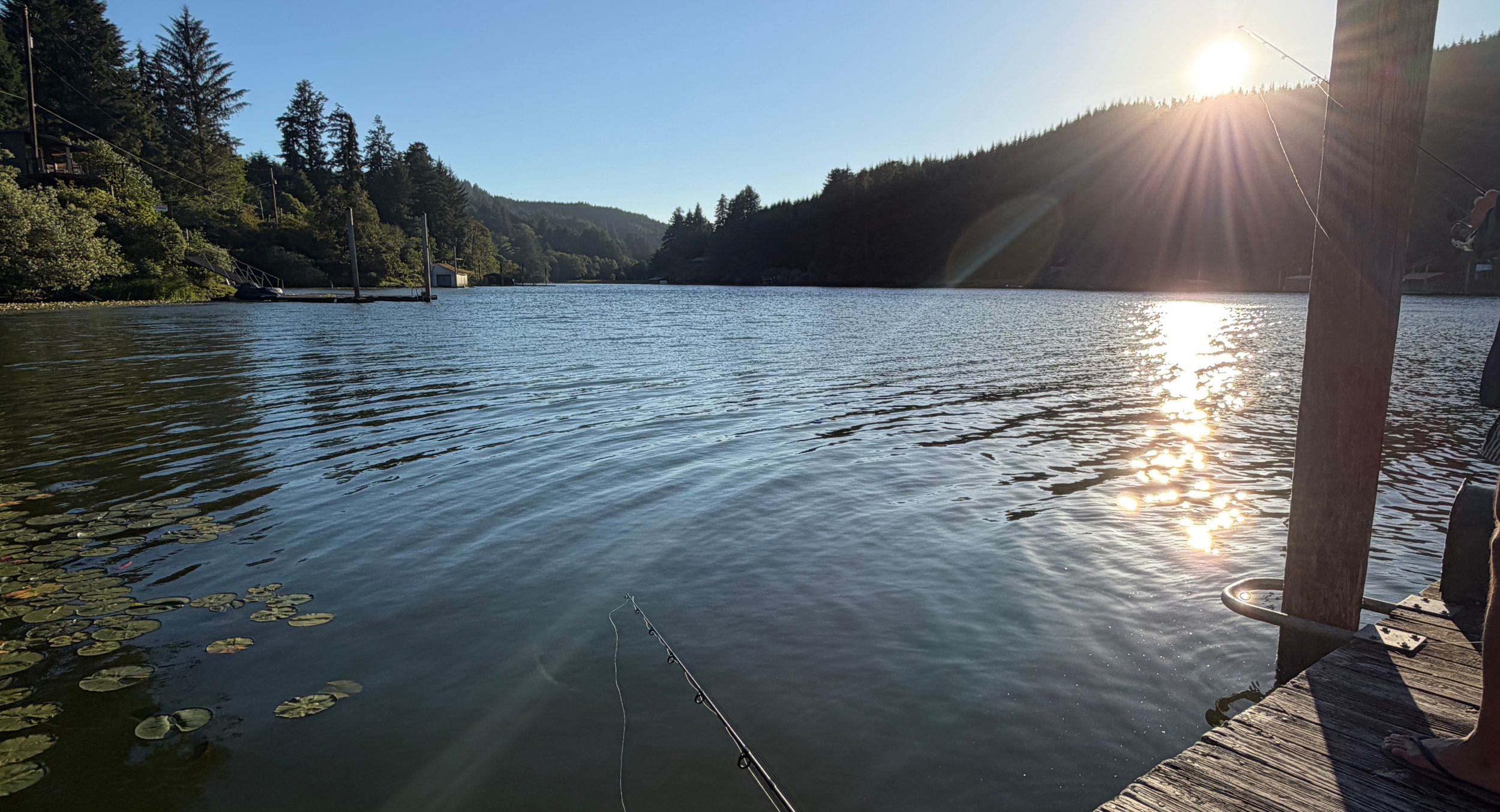
I post a lot on social media - I love sharing the beauty in my daily life. People love to see us on the dock fishing as the long summer days stretch into 9pm sunsets, the sun sparkling on the lake, the deer walking the path through the property from the forest to the clearing out back. But here’s what I see when I look at that view: I see two people who’ve worked on communication, honesty, and trust after 45+ years of life. I see a boathouse and a dock that needs to be redone and I’m admittedly a little daunted by that amount of work. I see the way I want the house to look after some time, love and attention. I see the deer who’s trust I’ve earned by being patient and gentle. I see the massive amount of grass my partner cut and that I’ve raked and piled up for burn season later. It’s work and joy so tightly interwoven that one does not exist without the other.
There is an important distinction here that my friend Lynn pointed out: Work that is chosen is not the same as labor imposed by necessity. For people who spend a lifetime cleaning other people’s homes, harvesting other people’s food, repairing other people’s property, or working with their bodies simply to survive, the idea of doing more physical labor may sound less like fulfillment and more like punishment. Part of the modern promise of wealth was that we could escape physical work altogether. Hard labor would be handed off to people with fewer options, while our success would mean never having to cook, clean, grow, repair, carry, or make anything for ourselves. But labor performed for someone else, under pressure and for inadequate pay, is not the same as work done in service of your own life. Tending your own land, preparing food for people you love, or repairing something you depend often creates deep satisfaction.
When I choose to do these things, I am not romanticizing hardship. I am reclaiming a kind of work that directly supports the life I want to live. The joy I contain is directly tied to my participation in my own life. Making mustard takes longer than pulling a jar from a grocery store shelf. Baking bread requires learning how dough responds to heat, humidity, different flours, and time. Catching a fish means accepting the whole process, not just the clean white fillet arranged beneath plastic. Caring for a piece of land means there is always something to maintain. Doing more for ourselves does not mean rejecting modern life or pretending every household task is spiritually profound. I am grateful for washing machines, refrigeration, hardware stores, and grocery stores. I do not want to churn my own butter every morning or give up indoor plumbing in the name of character development. Trust me, when we have been without water, I have complained plenty.
The reward is competence. It is attention. It is the satisfaction of turning raw ingredients into something useful and good. It is knowing how to feed yourself, fix something, grow something, or make something with your own hands. It is the feeling that your day contained substance. It is confidence. It is knowing that your time and energy meant something.
People often say they do not have time for these things, but what they usually mean is that they have filled their time with other priorities. We spend hours shopping, scrolling, following celebrities, and literally watching other people compete, build, travel, cook, renovate, and live on television. Then we wonder why our own lives feel a bit hollow. We have been sold the idea that the ideal life is one in which everything difficult has been outsourced. Someone else grows the food, prepares the meal, repairs the house, cleans the fish, maintains the land, entertains us, and creates the things we purchase. Our role is reduced to earning and consuming.
That arrangement may save work and effort, but it does not necessarily produce a meaningful life.
Convenience also hides the consequences of what we consume. When everything arrives sealed in plastic, delivered to the door, and discarded without thought, it becomes easy to overlook the labor, resources, fuel, waste, and distance involved. A loaf of bread seems like a simple object until you make one - easy to let it get moldy and toss it half-eaten. A fish seems like a product until you catch and clean it. A piece of land seems effortless until you become responsible for its care.
The mustard tastes better because I made it, because I soaked the seeds, adjusted the liquid, blended it until the texture was right, and waited for the flavor to settle. The bread feels more valuable because I planned for it. The fish matters because I saw it whole and accepted the responsibility of preparing it. The land feels like my home because I participate in its care.
Convenience gives us more free time. The harder question is what we are doing with it.
If the time we save is used to create, connect, rest, learn, care for others, or do work that matters to us, convenience has served us well. But if we use it only to consume more, shop more, scroll more, and watch other people live, then perhaps the trade has not been as favorable as we were led to believe.
A meaningful life is not always an easy one and sometimes the work is the reward you’re looking for.