Having worked in the food industry I can tell you that simply because something is labeled organic doesn’t always mean it’s better. Sure, if you’re choosing between factory farmed chicken and Mary’s Organics - pick Mary’s. For me? I’ll choose something sustainable and local (even if not certified organic - because that’s expensive to maintain for a smaller farmer/rancher). My goals with food are to nourish myself, make choices that reflect my values, and support my community - including local businesses and growers.
As always, buy the highest quality local product you can. I realize that’s not always super easy at first glance - but the better ingredients you start with the healthier the food (and YOU)! We’re lucky that here a whole chicken is about 6 euros (that’s crazy cheap compared to America), but in America where we live in Oregon, we can find a better local product than most high-end organic chickens.
I like to cook a whole chicken at the beginning of the week so I have plenty of cooked meat and homemade stock ready for whatever I'm making. It's one of the easiest ways to get ahead on meal preparation without spending a lot of time in the kitchen every day. The process is simple. I gently simmer a whole chicken with vegetables and herbs, remove the meat once it's tender, and return the bones to the pot to make a rich, flavorful stock. I often add a couple of extra chicken breasts to the pot so I have more lean meat for salads, soups, and rice bowls.
Skip buying overpriced processed bone broths and simply make your own! This broth comes out so rich that it usually cools into a jelly - but fear not, once you heat it you will see it turn back into ‘liquid gold’.
This week I will use this single chicken + a few breasts in:
Asian Chicken Salad with Fresh Herbs on Rice Noodles
Avoglomeno Soup
Thai Peanut Coconut Chicken Curry with Vegetables
…and I’ll use the stock to cook rice and bulgur as well!
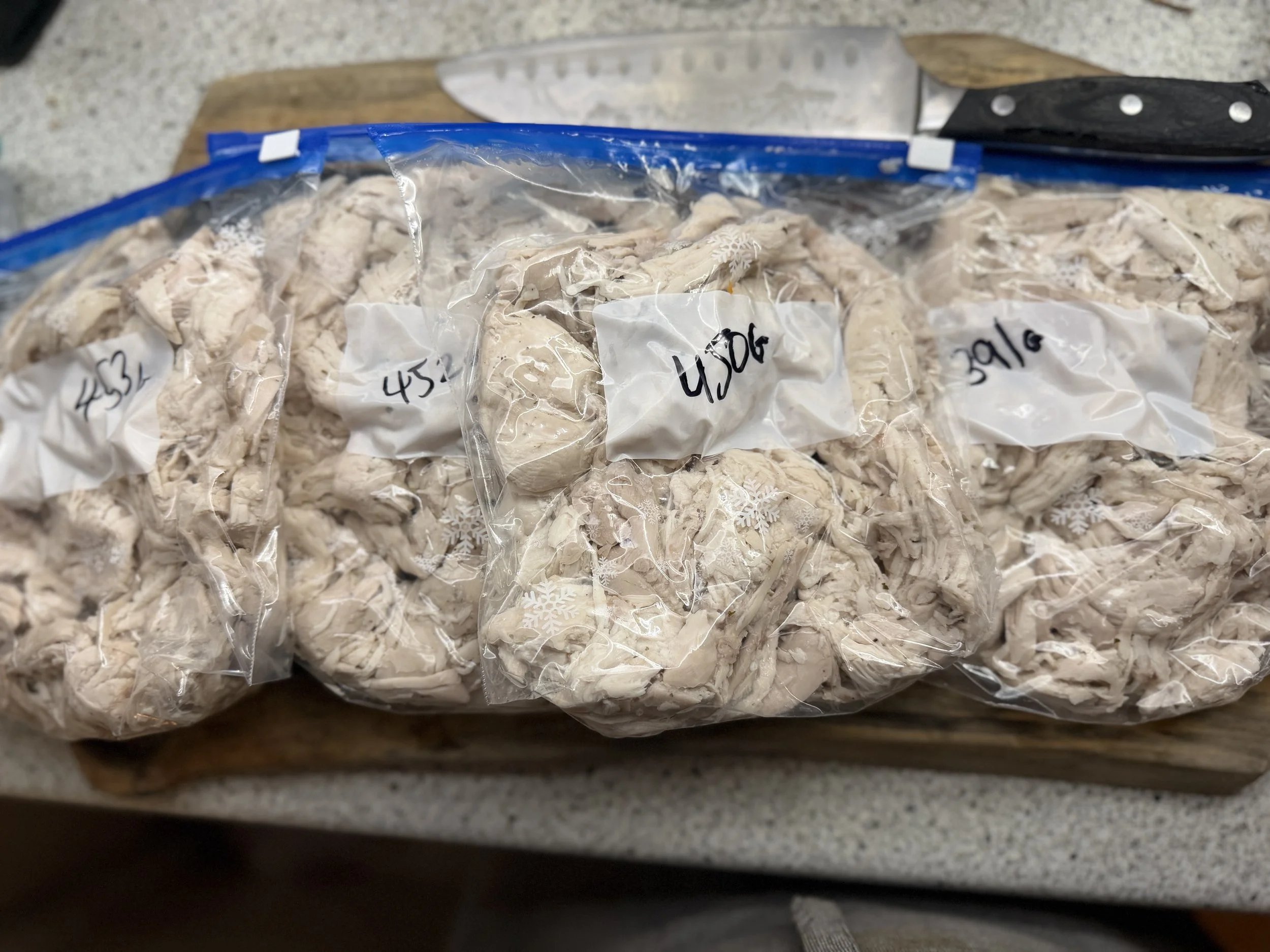
Once everything is cooked, I portion the chicken and stock into freezer bags. I typically freeze the meat in 450g / 1 lb portions and the stock in 650g-750g portions, making it easy to pull out exactly what I need for a recipe. I freeze them flat so they thaw quickly later on!
Grab a big pot and let’s go!
Prep Time: 15 minutes
Cook Time: 3–4½ hours
Yield: Approximately 1–1.3 kg cooked chicken from a 1.5–2 kg whole bird, plus the meat from any additional breasts; approximately 2–3 litres stock, depending on evaporation
Ingredients
1 whole chicken (approximately 1.5–2 kg)
2 additional chicken breasts (optional)
2 medium carrots, roughly chopped
2 celery stalks, including leaves
1 large onion, quartered
4–6 garlic cloves, lightly crushed
2 bay leaves
1 tsp whole black peppercorns
1 tsp dried oregano
1–1½ tsp salt
3–4 litres cold water, or enough to cover the chicken
Instructions
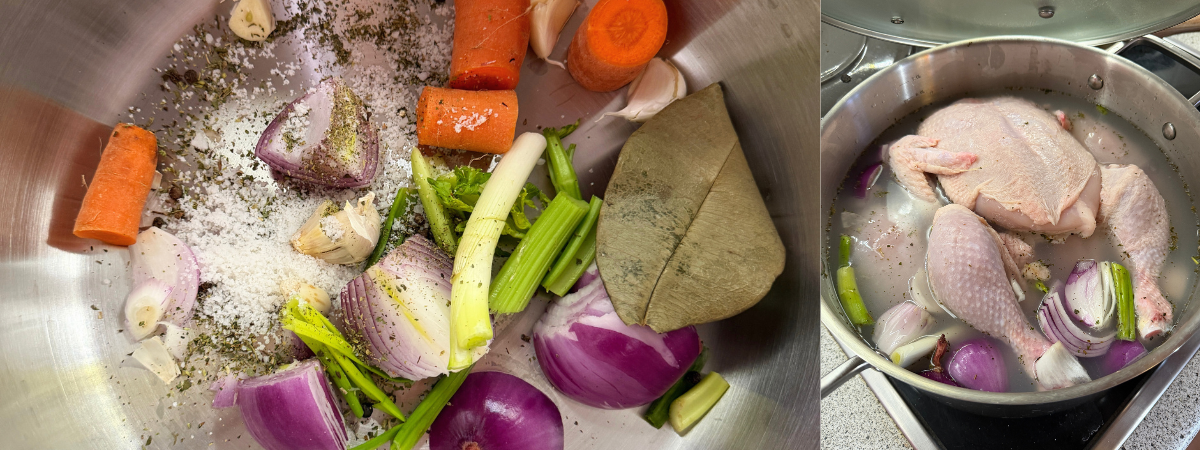
Place the whole chicken in a large stockpot with the carrots, celery, onion, garlic, bay leaves, peppercorns, oregano, and salt. Add enough cold water to cover the chicken by about 2–3 cm.
Bring to a gentle simmer over medium heat, skimming away any foam that rises to the surface. Reduce the heat to low and simmer gently, partially covered, for approximately 60–90 minutes, depending on the size of the chicken. DO NOT BOIL.
If adding extra chicken breasts, place them in the pot during the final 15–25 minutes of cooking. Remove them when the thickest part reaches 74°C (165°F). Check the whole chicken for doneness as well. The breast should reach 74°C, while the thighs are generally more tender around 80–85°C.
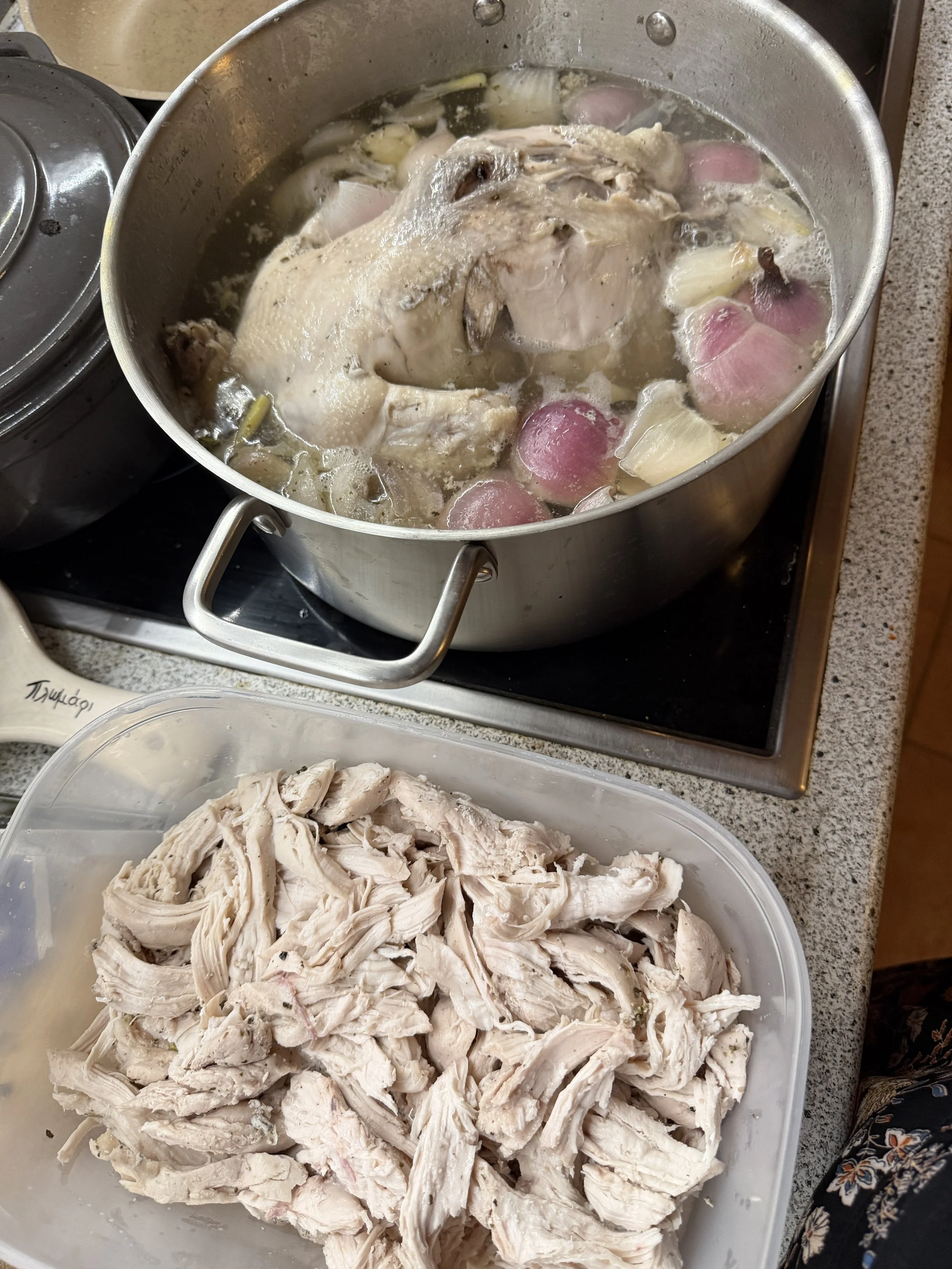
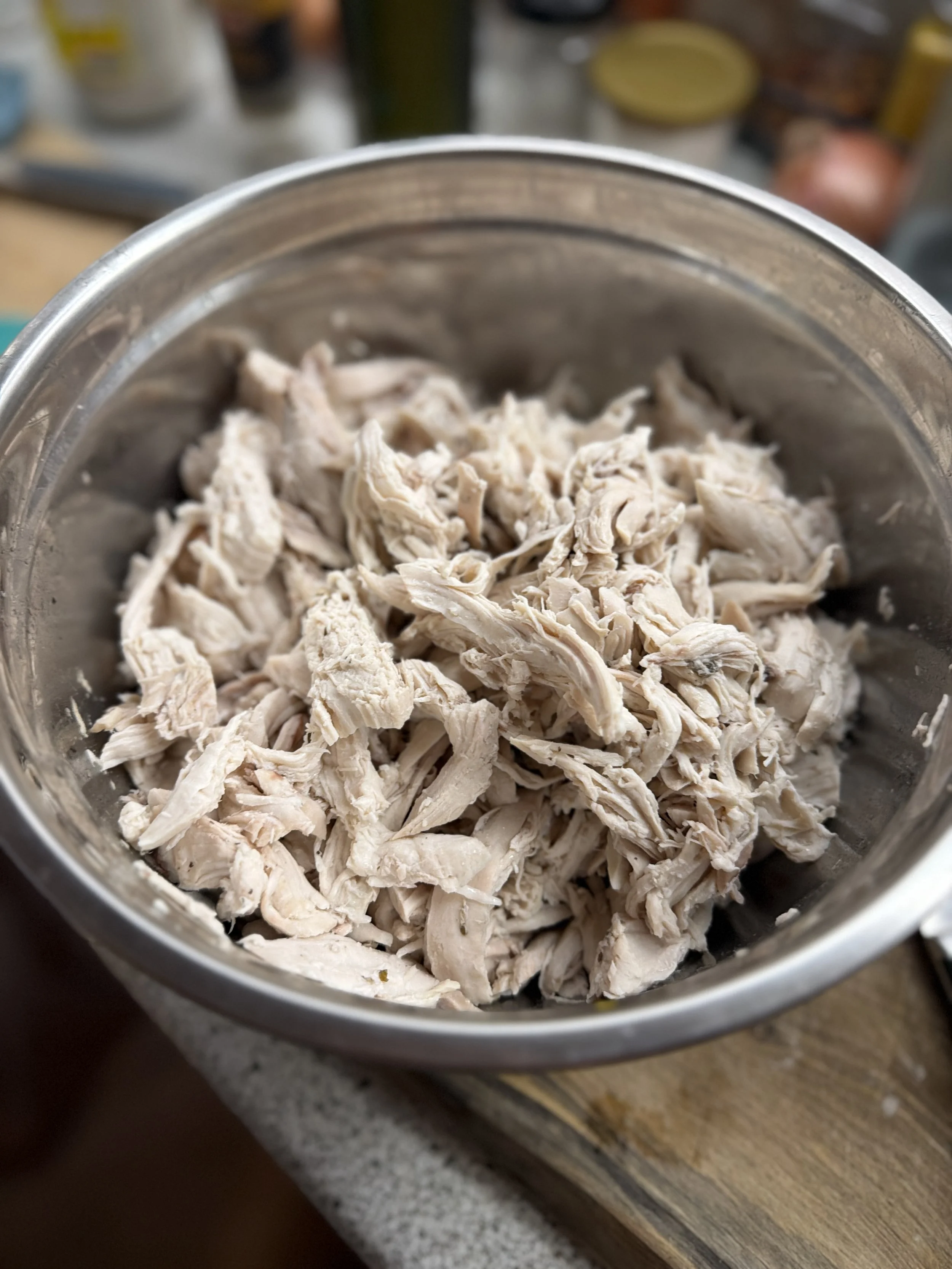
Transfer the cooked chicken to a tray and allow it to cool just enough to handle. Remove the meat from the bones, discarding any unwanted skin, fat, or cartilage. Shred or chop the meat and set aside.
Return the carcass, bones, and any skin or connective tissue to the stockpot with the original vegetables and herbs. Add a little more water if necessary to keep the bones submerged. Simmer gently for another 2–3 hours, partially covered. This second simmer really extracts the collagen and nutrients out!
Remove the bones and strain the stock through a fine-mesh strainer. Discard the cooked vegetables and bones. Taste the stock and adjust the seasoning if needed. If you prefer a more concentrated stock, simmer the strained liquid uncovered until reduced to your liking.
Cool the chicken and stock promptly. Divide the chicken into 250 g portions, adding a tablespoon or two of cooled stock to each bag to keep the meat moist. Portion the stock into 650 g freezer bags or containers.
Label everything with the contents, weight, and date. Refrigerate what you'll use within 3–4 days and freeze the rest.
Storage and Freezing
Cooked Chicken: Refrigerate in airtight containers for up to 3–4 days or freeze for approximately 3–4 months for best quality. I like to portion mine into 225g bags, which is a convenient amount for quick meals for two or 450g bags to serve 4.
Chicken Stock: Refrigerate for up to 3–4 days or freeze for approximately 4–6 months for best quality. I freeze mine in 650g-750g portions. Freezing the bags flat makes them easy to stack and store.
Cooling: Don't leave a large pot of hot stock sitting on the counter. Divide it into smaller containers or use an ice bath to cool it quickly. Refrigerate or freeze within two hours.
Recipe Notes
You can make this recipe with just the whole chicken, but I often add extra chicken breasts because I use so much shredded chicken throughout the week. The additional breasts can be removed as soon as they're cooked, keeping them tender while the rest of the chicken finishes.
A gentle simmer produces tender chicken and a clearer stock. Avoid boiling vigorously, which can toughen the meat and make the stock cloudy.
Don't worry if the finished stock becomes gelatinous in the refrigerator. That's a good sign that collagen has been extracted from the bones. It will liquefy again when heated.
I use the cooked chicken in everything from avgolemono soup and Thai chicken salads to pilav, fried rice, and grain bowls. The stock is useful for soups, sauces, cooking rice, and any recipe that needs a little extra flavor.