Zen & The Art of Home Maintenance
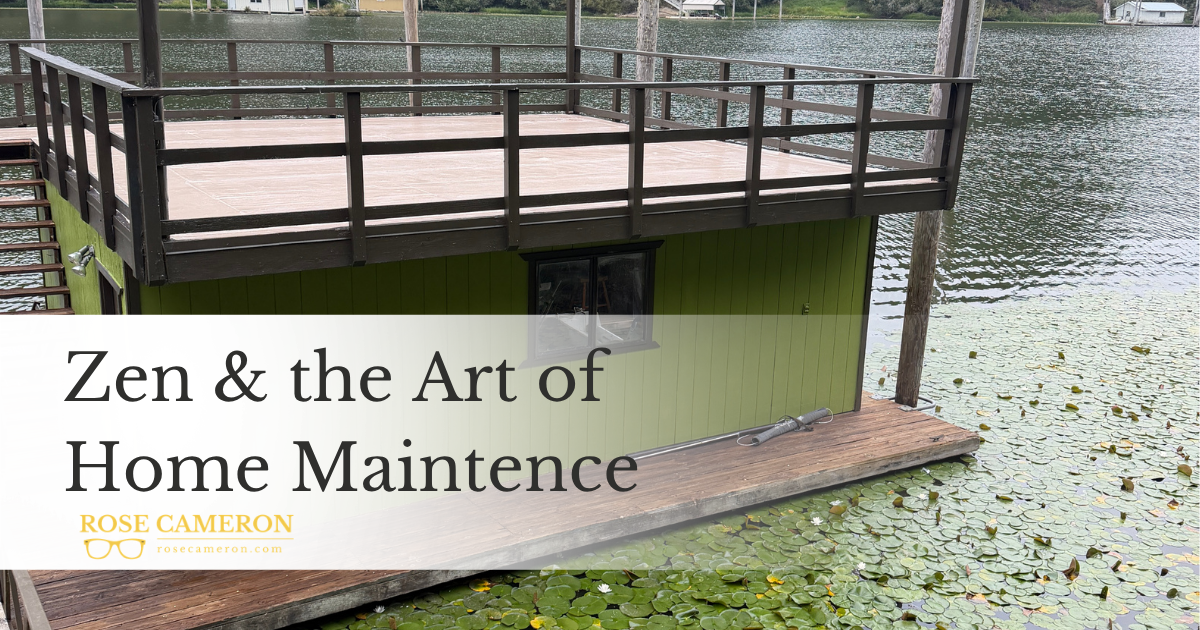
With less than a week before we left the lake house, I was still wrapping up jobs I did not want to do.
What remained were the annoying details: getting the ladder back down to the boathouse to finish some missed trim work, moving the vinyl strips (again), painting the dock ramp lamp post. The sort of jobs that are easy to postpone because frankly, they suck. Unfortunately, I said I was going to do them and one the rules I have tried to build my life around is simple:
If I say I am going to do something, I do it.
Temporary discomfort isn’t allowed to quietly make my decisions for me and I reinforced that behavior a lot this summer. Getting things done is more about being willing to begin, find out and keep going than doing them perfectly.
Motorcycles and a Log Cabin
I read Robert Pirsig’s Zen and the Art of Motorcycle Maintenance in high school. The book follows a father and son on a motorcycle trip across the American Northwest, but it is not a travel book nor a motorcycle manual. Pirsig uses the trip and the practical work of maintaining a machine to explore the idea of quality, the relationship between technical thinking and lived experience, and what it means to care about how something is done.
How you do anything is how you do everything.
If you half-ass one task, you will half-ass others.
If you quit when things get tough in one job, it will happen in other areas.
If you keep pushing the work back and filling your time, you’ll see that in everything.
You can do one thing magnificently, but the true test of character is how you approach ordinary work. After spending a summer painting, sealing, measuring, hauling supplies and trying to keep an outdated and under-loved cabin and boathouse standing, I understand that idea much more deeply than I did at sixteen.
F* Around and Find Out
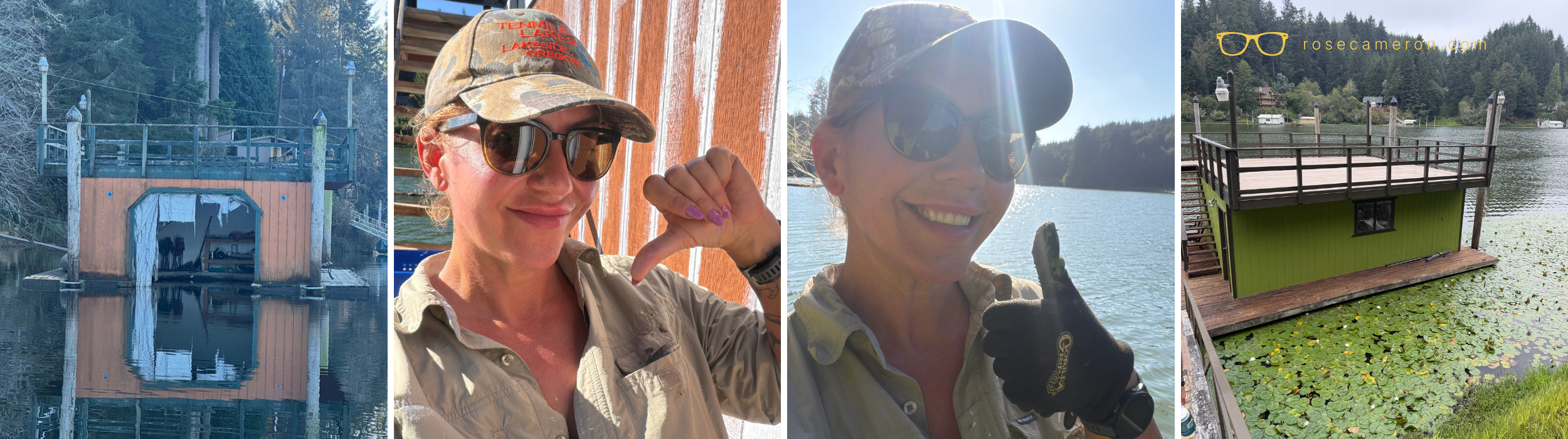
Failure is the fastest teacher. The boat entrance to our boathouse needed a door of some kind to protect it from weather while still allowing the boat to pass through. Everyone on the lake has garage-style doors that cost a fortune or nothing much. This reminded me of solving this problem before when I worked in commercial food production and had walk-in freezers bigger than studio apartments. Vinyl flaps.
Hanging them on a ladder in a freezer is cold. Hanging standing on a ladder in a floating boat is a real bitch.
When I finally finished, it looked good, the strips hung properly, and the coverage was excellent. Then we tried to bring the boat through…
The overlap created so much resistance that the boat struggled to get in and out. The flaps caught, dragged and had to be lifted out of the way. We had successfully created an entrance that was very well protected from the weather and barely usable for its actual purpose. We could have treated that as a failure. Instead, we moved the strips farther apart and reduced the overlap. Does it work great now? Also no. But it’s closer.
We did not get the best solution by overthinking. We got there by DOING. That is how many decisions work. You can research, measure and think through every possibility, but eventually you reach the limit of what planning can tell you and the only remaining way to find out is to do it.
Done is better than perfect
The entire boathouse needs to be torn down and rebuilt, that is the real answer.
It is also more than I could take on this summer as far as time, money, and planning. So, I repaired it. I sealed the roof, dealt with the leaks, painted the exterior and installed the vinyl entrance. We did enough to protect the structure and make it usable for another few years while we determine what the larger project should become.
There is a difference between careless work and a sound temporary repair. “Good enough” does not have to mean sloppy. Sometimes it means understanding the full scope of a problem and choosing the part you can responsibly handle right now without letting it evolve into something too big to begin.
You use the skills you have. You stabilize what needs attention. You buy yourself time. Then you prepare for the larger step. Making something functional can help you see what it needs to become - the boathouse surprisingly turned out pretty dang close to my idea and gave me a TON of much needed confidence (and time) to plan a true rebuild.
Done does not mean you are never allowed to improve it. It means the problem is better than it was when you began.
Starting is usually the hardest part
When we arrived at the lake house I felt like I’d bitten off more than I could chew. I would think about the supplies, the setup, the mess and everything that could go wrong. The job would grow larger in my head while remaining completely untouched in reality. I made shopping lists and calculated costs and then… went fishing.
Before you begin, you are trying to solve every possible version of the problem at once. Starting eliminates most of them.
This applies well beyond home repairs. You can spend months wondering whether you will be good at painting, enjoy running, like a different career or be comfortable speaking on camera. You can imagine every single iteration, but thinking cannot give you the experience.
You Don’t Have To Like It
I did not enjoy every hour of work on this cabin. Much of it was physically exhausting, repetitive, annoying, painful and at times I may have secretly wished that the whole damn boathouse would just sink!
Perseverance is deciding that your temporary feelings do not get the final vote, not pretending that difficult work is secretly delightful. Discipline only looks impressive - often the reality is way less sexy. It looks like putting on dirty clothes, carrying your tools back outside and finishing the last stupid section because you said you would.
The Zen
The #1 thing that separates people who DO things from people who THINK about things is not talent, skill, passion or ability.
It’s starting before you know how. It’s a willingness to learn. Being ok with errors. Knowing what level of outcome is acceptable and aiming for that rather than perfection. It’s knowing that even an imperfect result means you’ve learned more.
It’s how people get in shape and start businesses and run marathons and learn new languages and leave unfulfilling situations and on and on. It’s not magic, it’s a willingness to do the work.
With Love,