Homemade Whole-Grain Mustard
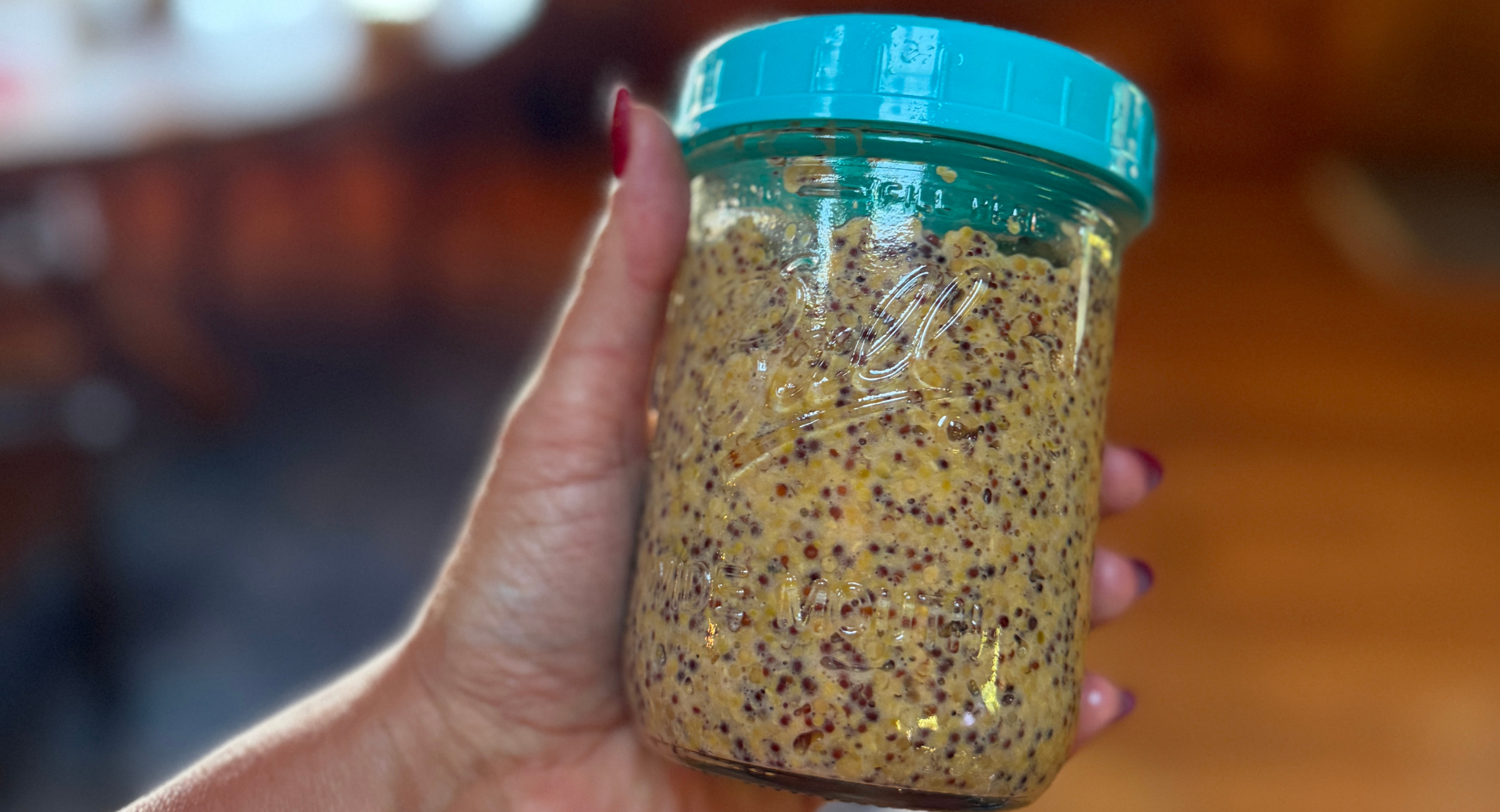
I use whole-grain mustard constantly. It goes into most of my salad dressings, gets spread on sandwiches, spooned over salmon, mixed into sauces, and tossed with potatoes before I roast them. It is one of those ingredients that always seems to be sitting front and center in the refrigerator.
So, of course, I decided to make my own.
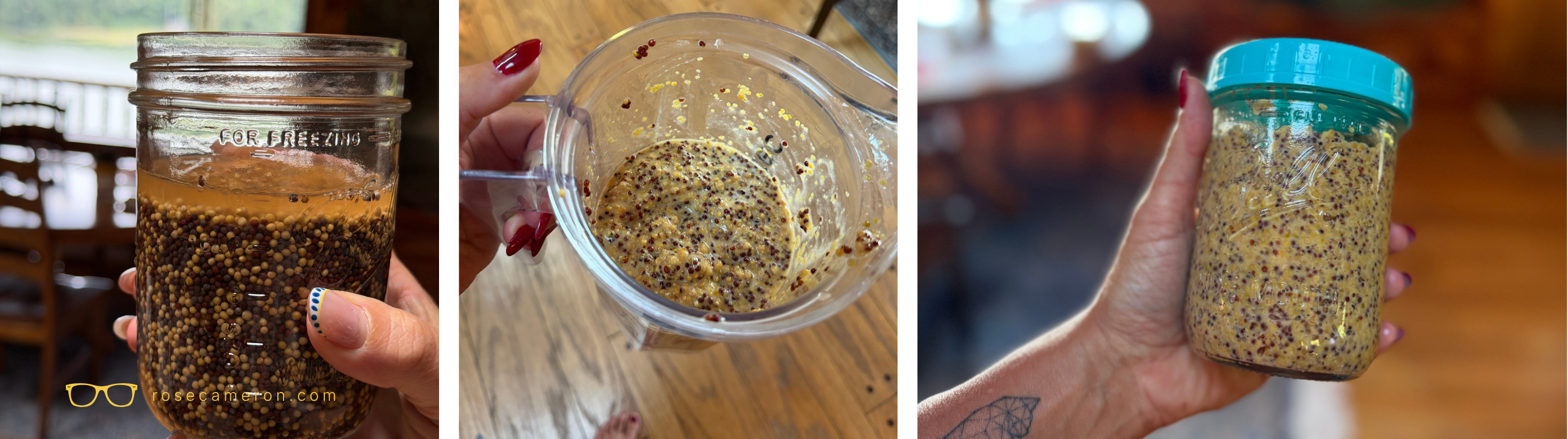
The process is incredibly simple! Mustard seeds absorb liquid, so depending on the seeds and how long they soak, you may still have quite a bit of vinegar and water sitting in the container.
If you blend all of that liquid into the mustard without paying attention, you can end up with mustard soup.
The solution is easy. Before blending, look at the soaked seeds. If there is a significant amount of free liquid sitting above them, pour some off and reserve it. You can always add it back later. It is much easier to thin mustard than it is to thicken it.
The other trick is in the blending. For a grainy mustard, you do not want to simply stir the soaked seeds together, but you also don't want to puree them into smooth Dijon. Blend until some of the seeds have broken down and created a thick, creamy mustard base while plenty of whole seeds remain. Then.. give it time. Freshly made mustard is sharp. Really sharp. After a few days in the refrigerator, the flavor mellows and becomes much more rounded.
Makes approximately 2 cups
Ingredients
1 cup mixed yellow and brown mustard seeds
1 cup apple cider vinegar
1 cup water
1 tablespoon honey
1 teaspoon fine sea salt
¼ teaspoon turmeric, optional for color
Instructions
Combine the mustard seeds, apple cider vinegar, and water in a glass jar or nonreactive container. Stir, cover, and let the seeds soak for 24 to 48 hours (I did 48).
After soaking, check the consistency before blending. If there is a noticeable amount of liquid sitting above the mustard seeds, pour off about ¼ cup and reserve it. Do not discard the liquid. You may want it later.
Transfer the soaked mustard seeds and remaining liquid to a blender or food processor.
Blend in short pulses until approximately one-third to one-half of the mustard seeds have broken down. The liquid should begin to look thick and creamy, creating a mustard base around the remaining whole seeds. Stop while the mustard still has plenty of visible texture.
Add the honey, salt, Dijon mustard, and turmeric, if using. Pulse briefly to combine.
Check the consistency. If the mustard is too thick, add the reserved soaking liquid back 1 tablespoon at a time, pulsing briefly between additions. Remember that the mustard will continue to thicken as it rests.
Transfer the mustard to clean glass jars and refrigerate.
Let the mustard rest for at least 2 to 3 days before judging the final flavor. For a more mellow, rounded mustard, give it about a week.
A Note About Fresh Mustard
Do not panic if your mustard tastes incredibly sharp immediately after blending. Fresh mustard has a much more aggressive bite than the jarred mustard you are probably used to.
Give it time in the refrigerator before adding more honey or trying to correct the flavor. The heat and bitterness will mellow considerably as the mustard rests.
If Your Mustard Is Too Watery
If you notice a lot of free liquid before blending, pour some off and reserve it.
If you have already blended the mustard and it is still watery, pour off a small amount of excess liquid if it has clearly separated. Then blend the mustard a little more. Breaking down more of the seeds creates a thicker mustard base while still allowing you to keep the whole-grain texture.
Refrigerate the mustard overnight before making any additional adjustments. It will continue to absorb moisture and thicken as it sits.