Aegean Kimchi
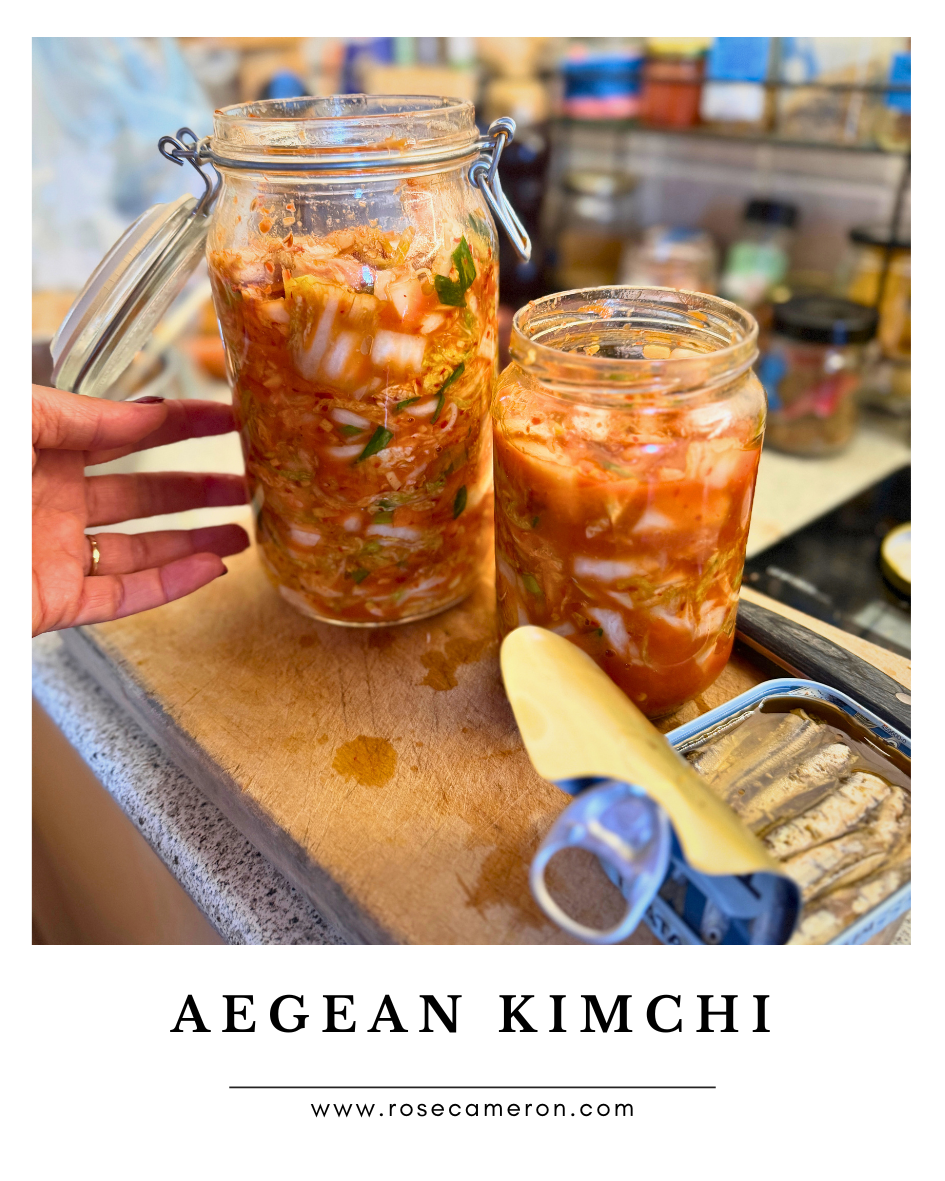
There’s something really satisfying about making foods that have existed in different forms all over the world for centuries. Every culture seems to have figured out some version of preserving vegetables with salt, spice, and time. Kimchi just happens to be one of the most delicious.
One of the most fun things about knowing how to cook is that it’s basically pattern/flavor matching. Kimchi is a pickled/fermented/spicy condiment. I knew I could get cabbage, carrot, ginger, green onions and garlic. I knew I was lacking a fermented pepper paste and fish sauce…but…all I have to do is find a good swap for those, right?
We have jars of spicy and sweet pepper paste we bring back from Türkiye called biber salça. I use it with apple cider vinegar, cumin and water to make a cholula-esque hot sauce, in soups and stews, in pasta sauces for depth and flavor, in spice pastes I rub on chicken legs and now… in kimchi! I needed a fishy, umami substitute for the fish sauce. I remembered that traditionally kimchi can include fermented salted shrimp or even oysters so I figured locally packed anchovies would provide that fishy depth I wanted.
Tip: Freeze the rest of the anchovies in their oil to use as the base for sauces and dressings later! Bonus? Blend them with garlic and portion in little scoops or ice cube trays, freeze and use later!
It’s spicy, garlicky, tangy, funky in the best way, and gets better every day. I’ll add in notes on changes for if you have access to a more global market or grocery store!
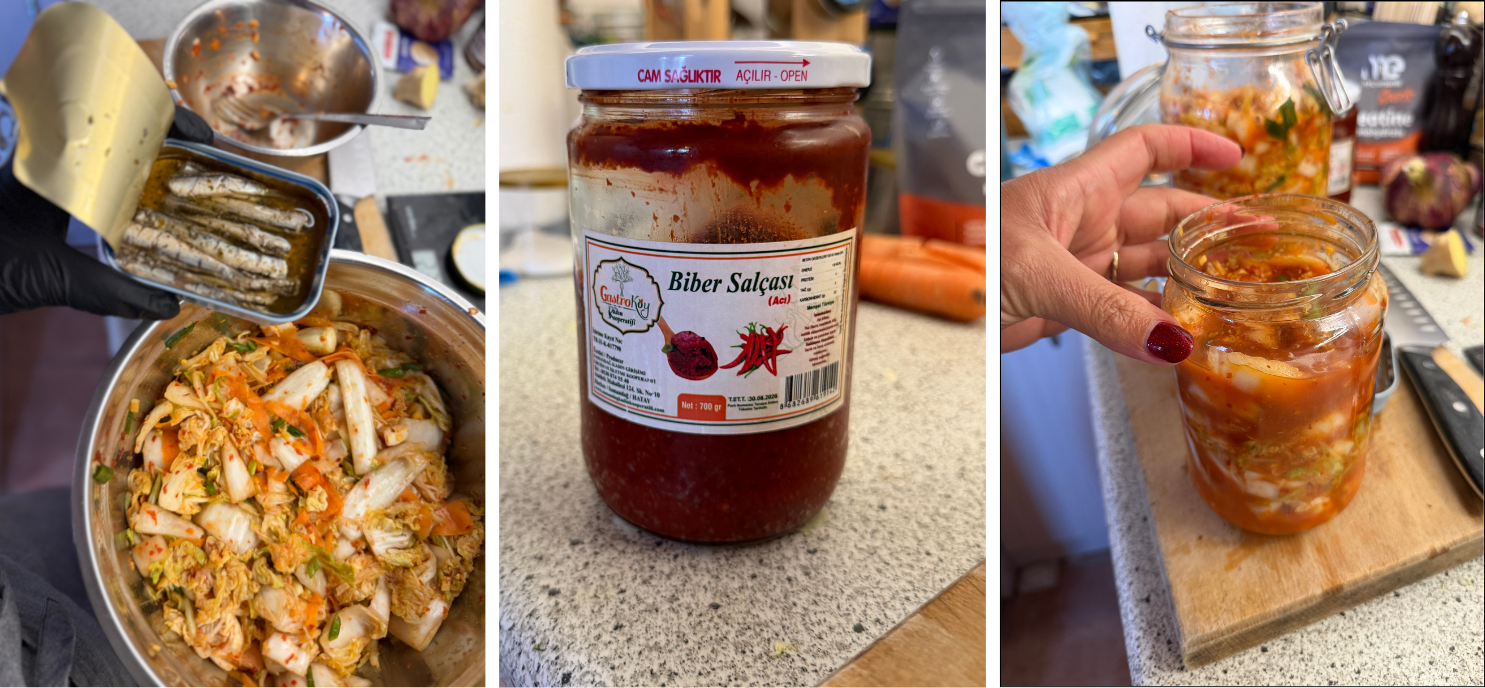
Aegean Kimchi with Biber Salça
Makes about 2 large jars
Ingredients:
1812 g Napa cabbage sliced in 1.5” strips
55–60 g coarse salt
1 large carrot, julienned (I used a peeler)
4–5 green onions, sliced
6–8 garlic cloves, minced
65 g fresh ginger, minced
3 tablespoons sweet biber salça**
1 tablespoon spicy biber salça or 1–2 teaspoons chili flakes**
2 tablespoons fish sauce OR 3 anchovies mashed into a paste
1 tablespoon honey or ½ grated apple or pear
**Note: If you’re elsewhere replace the biber salça (pepper paste) with Korean gochujang
Wear gloves - this is SPICY and you don’t want to have the regrets later ;)
2 clean jars with lids
Instructions:
Salt the cabbage - Place cabbage in large bowl and sprinkle with the salt while tossing and massaging the cabbage thoroughly for several minutes until it starts softening and releasing liquid.
Let it sit for 1½ to 2 hours, tossing once halfway through. The cabbage should become flexible and slightly translucent.
Rinse the cabbage lightly once or twice. You still want it salty, just not aggressively salty. Drain.
In a bowl or small food processor, combine: garlic, ginger, biber salça (or gojuchang), fish sauce or anchovies, honey or grated fruit, chili flakes if using. Mix into a thick red paste.
Combine everything - Add the cabbage, carrots, and green onions back into a large bowl. Add the paste and mix thoroughly with gloves until every piece is coated. Taste a piece. It should taste strong, salty, spicy, and savory. Fermentation mellows everything later.
Pack tightly into clean jars or containers, pressing down firmly after every few handfuls until liquid rises above the cabbage.
Leave about 1½–2 inches of headspace because fermentation expands. If needed, add a little extra brine (mix 1 cup water and 1 tsp salt). Put the lid lightly on and place the jars on a plate in case it bubbles over.
Ferment: Leave at room temperature for 24–48 hours depending on how warm your kitchen is. In warmer climates like Greece, fermentation moves quickly, so start tasting after the first day. Push the cabbage below the liquid daily and loosen the lid briefly to release pressure if needed. Once it tastes tangy and lively, transfer to the refrigerator.
How Long Does Kimchi Last?
Kimchi continues fermenting slowly in the refrigerator and can last for months if kept submerged and handled with clean utensils.
Days 1–3: fresh, crunchy, lightly tangy
Week 1–2: classic kimchi flavor develops
After a month: stronger, deeper, more sour
The older it gets, the better it becomes for fried rice, soups, eggs, marinades, and sauces.
How I Like to Eat It:
With grilled fish
Mixed into fried rice
Alongside giant beans or lentils
Steamed rice, pan fried eggs
Folded into yogurt sauces
In grilled cheese with kayseri cheese
Straight from the jar while standing in the kitchen (how most of it gets consumed - haha!)
One of my favorite things about cooking while living abroad is how recipes naturally evolve based on where you are and what’s around you. This kimchi feels exactly like that: a little Korean technique, a little Türkiye, a little Greece, and a kitchen full of ingredients that somehow found each other on an island in the Aegean.